Gama 1213-B
Jacqueline Kiyomi Gork
February 12–March 18, 2026
Canary Test is pleased to announce Gama 1213-B, new sound and sculpture installation by Los Angeles-based artist Jacqueline Kiyomi Gork. The exhibition opens February 12 with an opening reception 6-9pm and remains on view through March 30, 2026.
Jacqueline Kiyomi Gork has become a critical figure in contemporary sound practices for their nuanced approach to crafting sensory environments, often using custom sound software, live feedback systems, and acoustically-active material like wool, foam, and, recently, ceramic. In Gama 1213-B, the artist draws upon historical research and personal speculation to unite distant sites of historical confinement: the caves of Okinawa used by civilians during the final months of World War II and Tule Lake, California, one of the largest incarceration camps for Japanese Americans during the same period. This fusion is reflected in the exhibition’s title: gama for the Uchinaaguchi (Okinawan) word for cave; 1213-B for the barrack number where the artist’s family was incarcerated during the war.
Both the camp and the cave have profoundly shaped Japanese and Japanese American cultural identities, including Kiyomi Gork’s own family history as a fourth-generation Japanese American of Okinawan descent. Yet these experiences remain poorly memorialized in public life. With few physical markers and a cultural reluctance among families to speak openly about these histories, collective memory continues to fade with each passing generation.
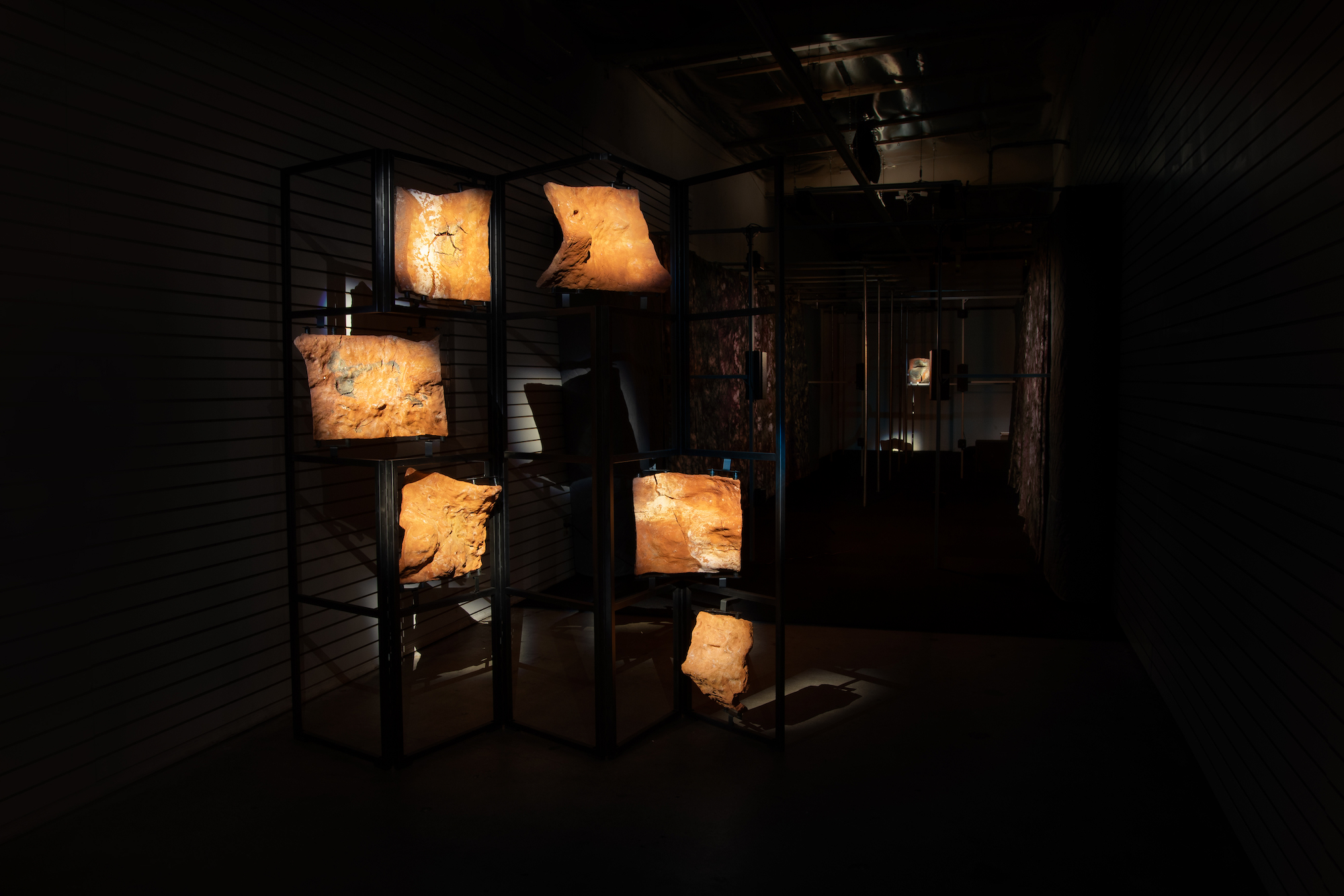
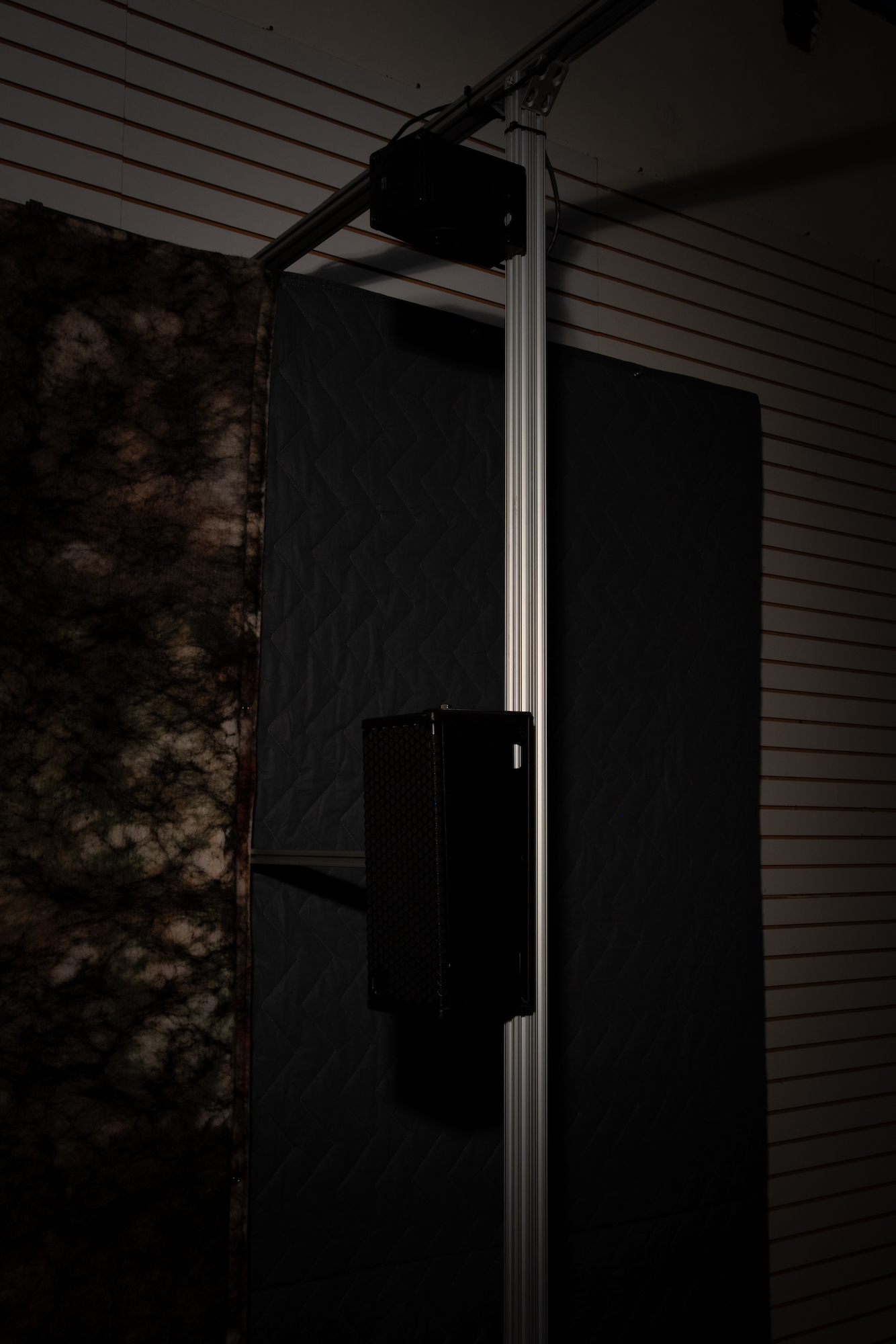
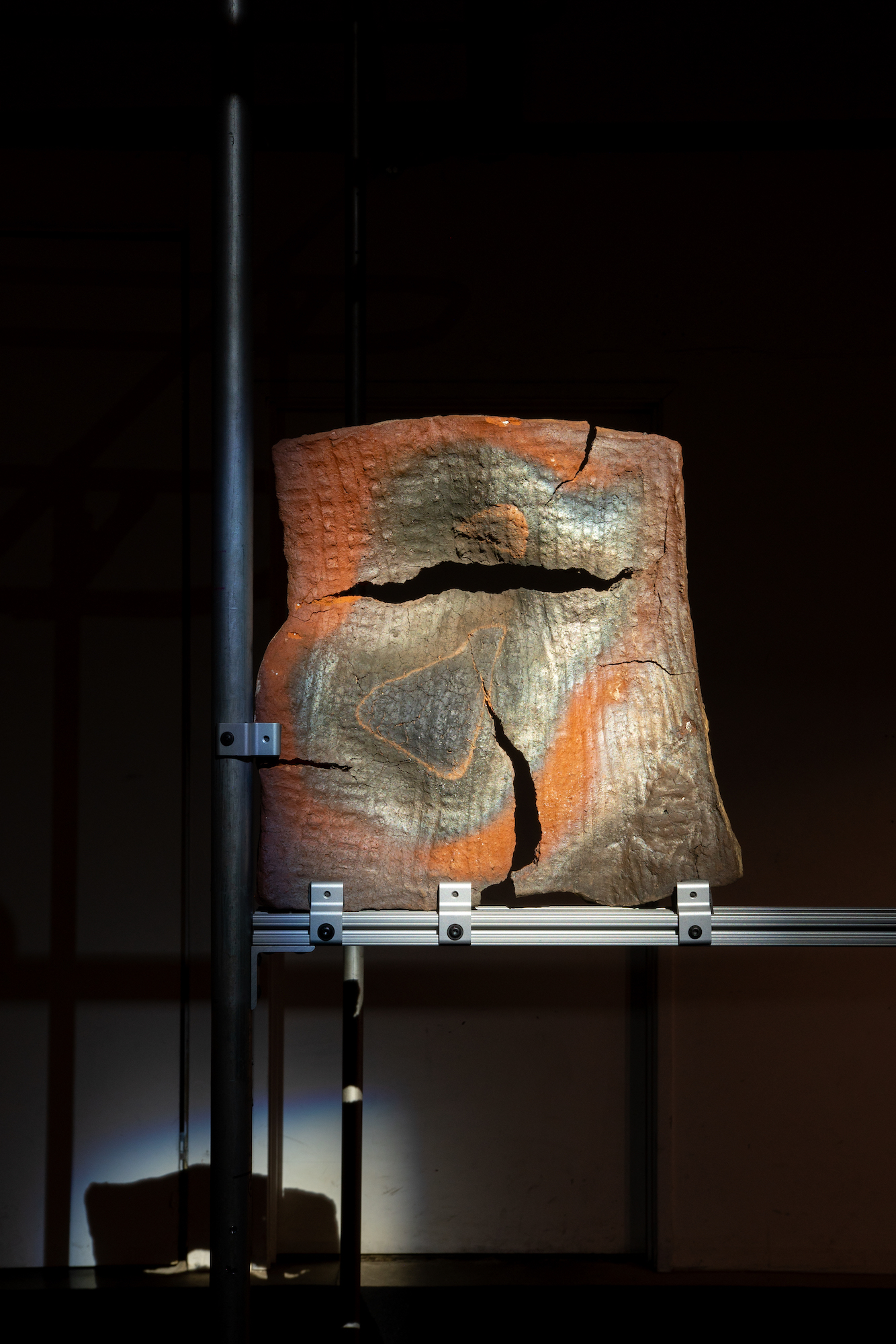
Through Gama 1213-B, Kiyomi Gork responds to this absence of collective remembrance with a sonic memorial that interweaves field recordings from the plains of Tule Lake with ceramic sculptures crafted from the clay of Okinawa. Although organic and irregular in appearance, the tiles are in fact pressed in repeated molds made from 3D scans of the cave surfaces. At the center of the space, a twenty-point-one channel sound system plays a spare composition of ambisonic field recordings taken at the site of internment in Northern California. A sound mapping software processes the recordings and simulates the architectural reverb of Barrack 1213-B where Kiyomi Gork’s family was incarcerated, reconstructed from archival architectural plans. This memorial space substitutes the static symbolism of traditional monuments in favor of a fluid, time based experience that mirrors the fragility and instability of memory itself.
While rooted in the artist’s personal history, Gama 1213-B is not a closed narrative. Instead, it brings audiences to a place of reflection where sound continually shifts in response to time, space, and sculptural presence. Each visitor’s encounter is unique, underscoring the fragility of memory and the instability of historical narratives. By opening the memorial to multiple forms of listening, the work invites connections beyond the two sites themselves, drawing attention to the ways wartime logics of confinement echo into the present. The architectural genealogy of Tule Lake prison barracks and Okinawan caves reverberates today in ICE detention facilities, where structures of forced confinement, misinformation, and legal liminality persist. The installation links past to present, inviting audiences to listen across time and consider how architectures of incarceration continue to shape contemporary life.