Waves
Morag Keil, Nancy Lupo, Chadwick Rantanen, Brennan Stalford, Nico B. Young
October 18–November 08, 2025
If you know me on the dance floor, you know I’m a dancer. I like music that hypnotizes. I like being so there that I forget who I am. I like the machinic repetition of techno. No thoughts. A groove on a turntable commanding everyone to move. Iterative motions—wrists, circular patterns, hips, twisting, spirals. Fitting this human body to this inhuman music, robot music, future music. Mechanized, human, mechanized, human.
It’s not future music, of course. It’s a forty year old artform with origins in Detroit. This is music of the assembly line, the discipline and collapse of industrial modernity. It’s music that arises from Black musical traditions and as Eshun, Atkins, and many others point out, the intergenerational experience of already-having-been-machine of slavery. Straight from the heart of the declining automobile production capital, techno finds revelry and breakdown in the assembly line. A classic techno track— four to the floor beat with rigid structure—easily suggests high-speed driving, parts machining, the electrical grid. Gears spinning. The factory is all cylinders, conveyors, a kind of circular motion that is only matched in the human body in the twisting head of a horror film.
Theorist Helmut Müller-Sievers homes in on this rotational motion in The Cylinder, his study of the industrial revolution and the inherently inhuman kinematics of the “cylinder chains” of factory production. “Consumers may think,” he writes, “that each product is shaped by the design of its inventor or the requirements of its purpose when in fact the lathe and other tools impose their ghostly presence of cylindrical forms on all industrial products.” The lathe, the borer, the screw, the newspaper press, the cement mixer, the phonograph—everything rolls, bearing the imprint of the cylinder, not the crafter’s hands.
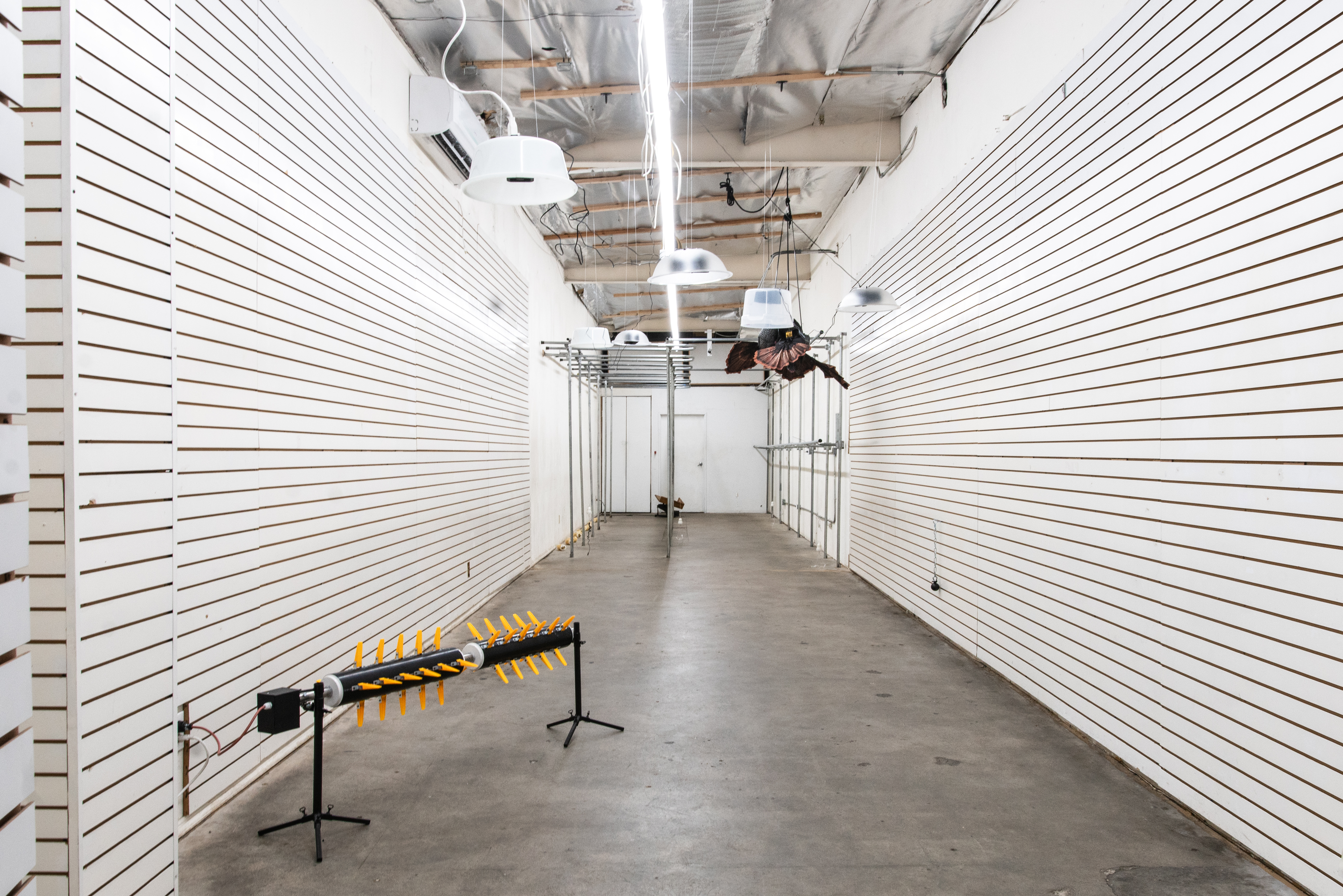
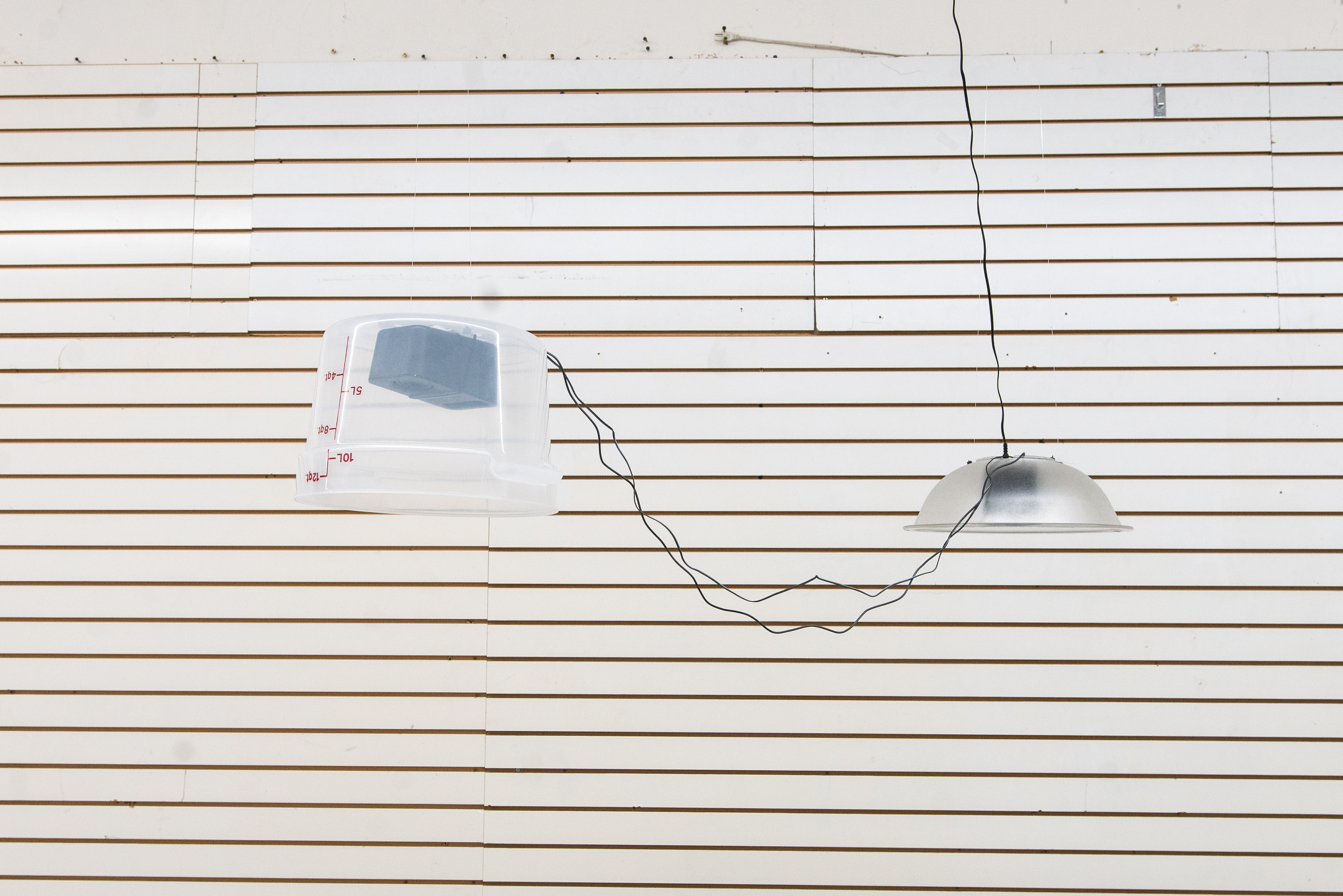
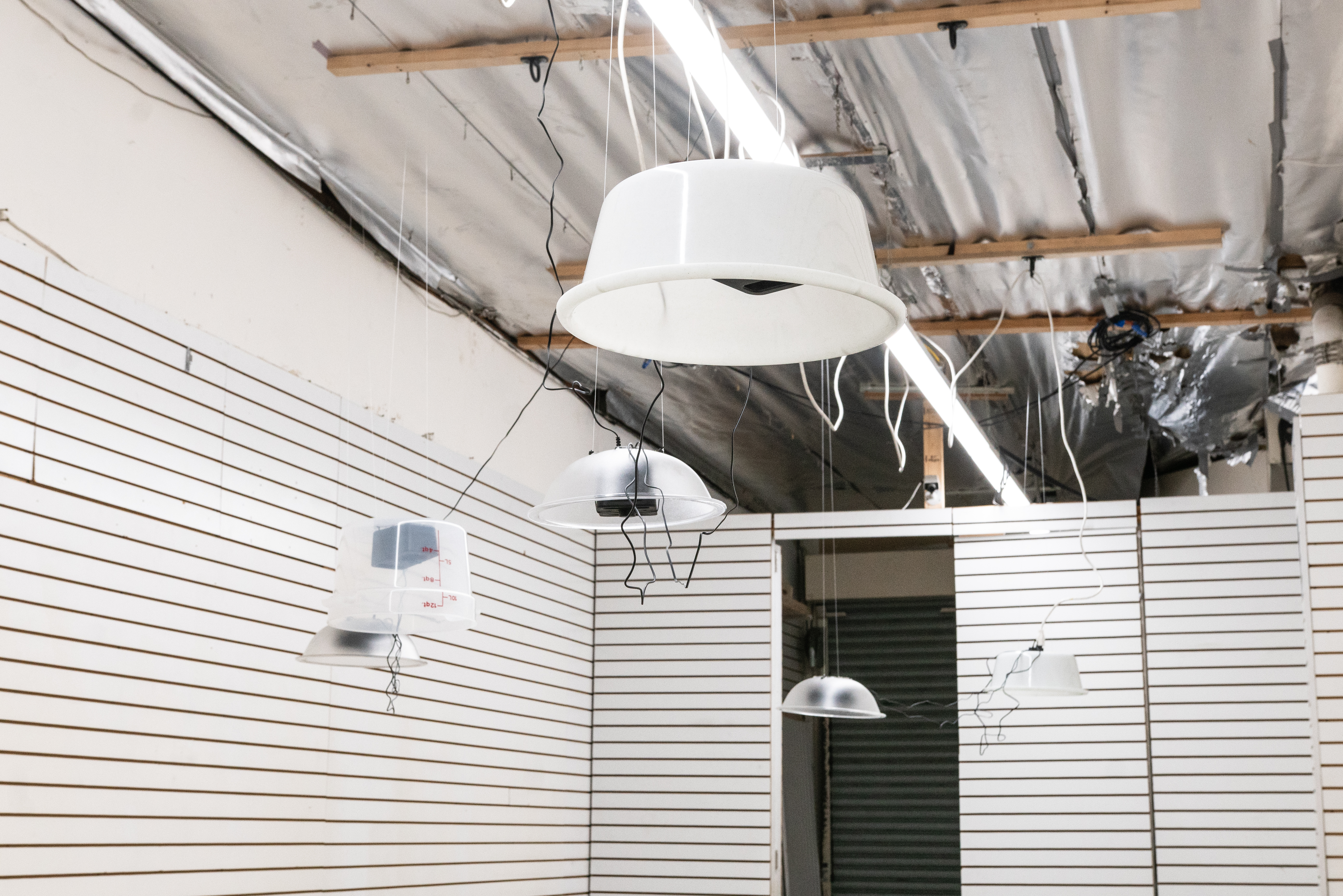
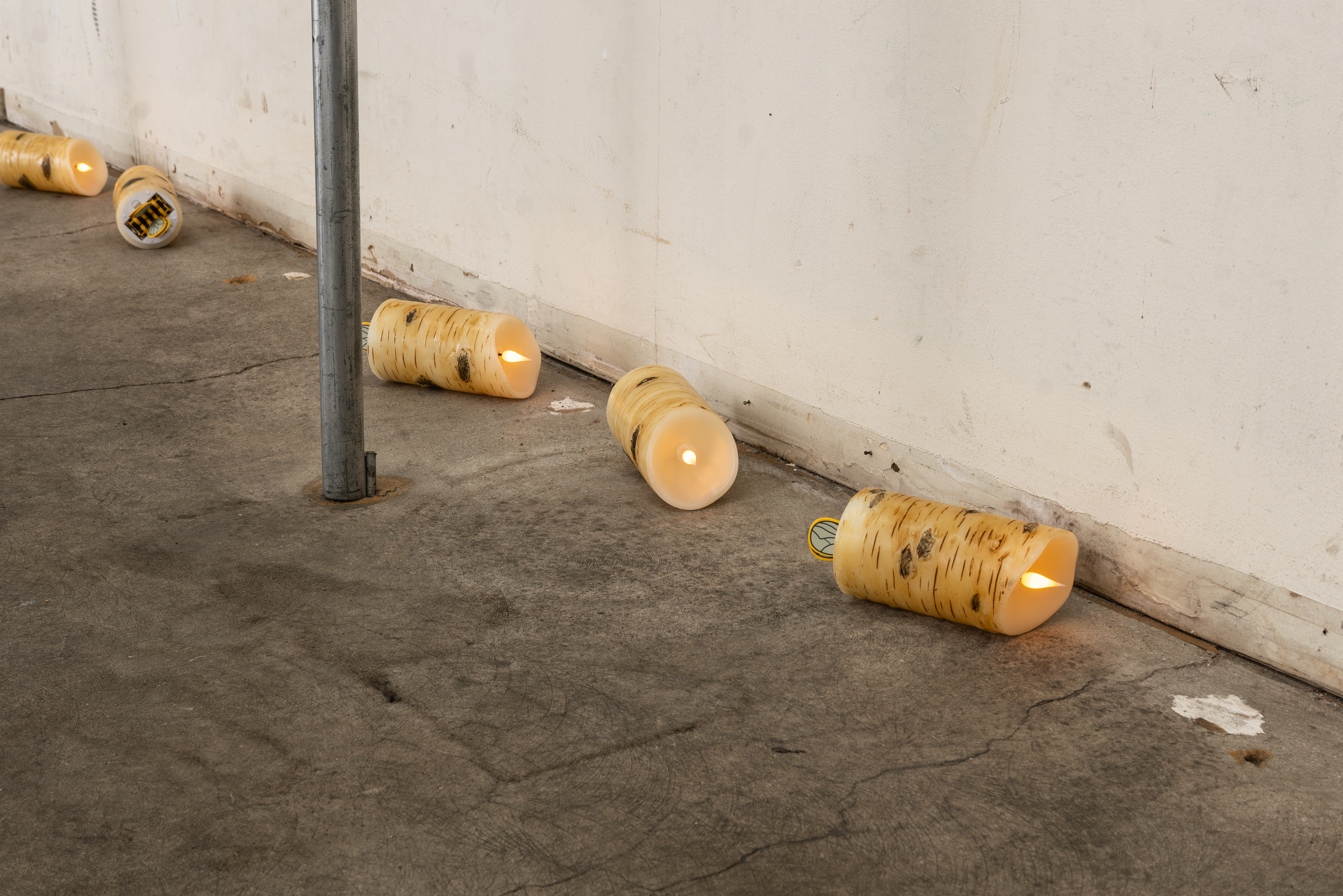
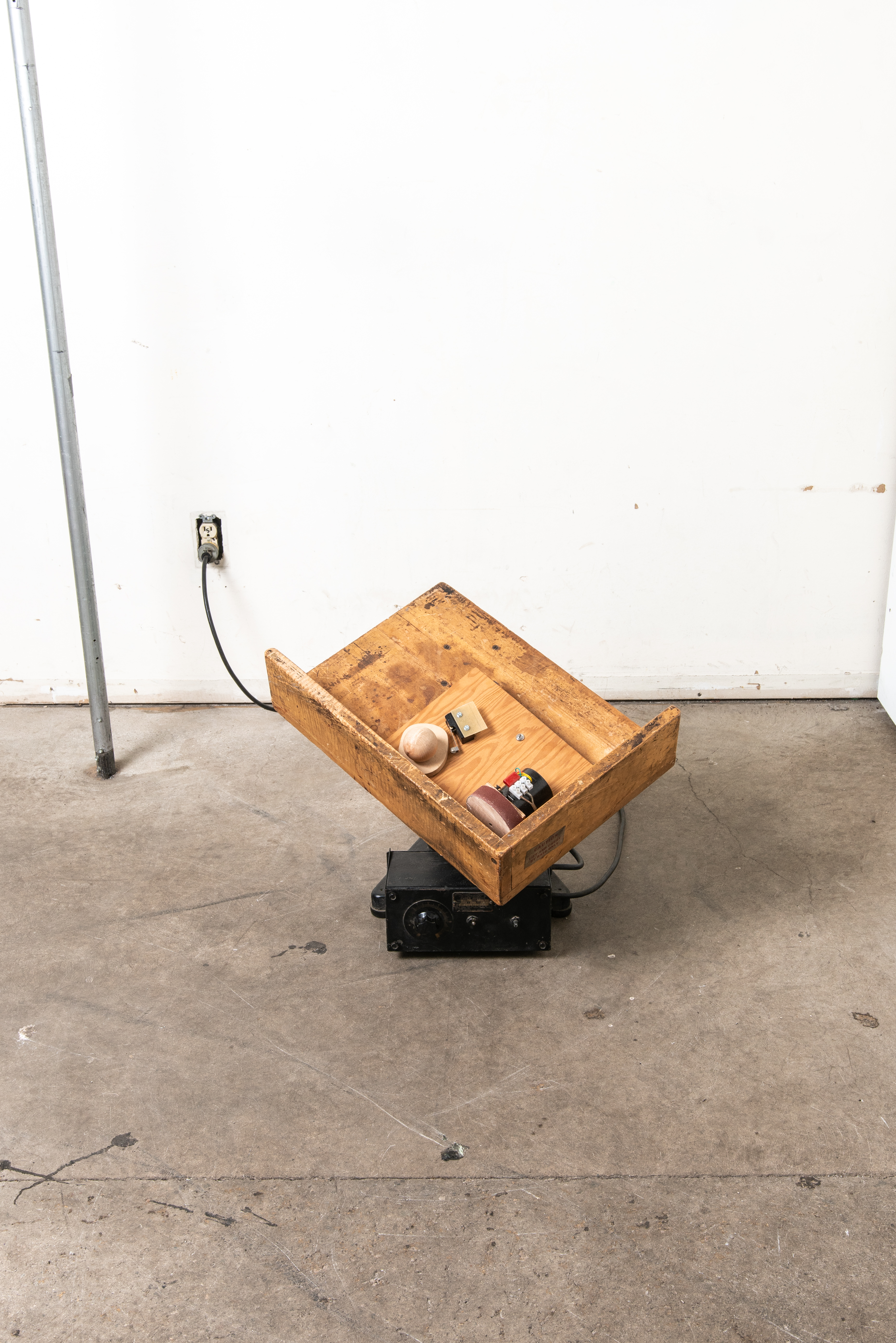
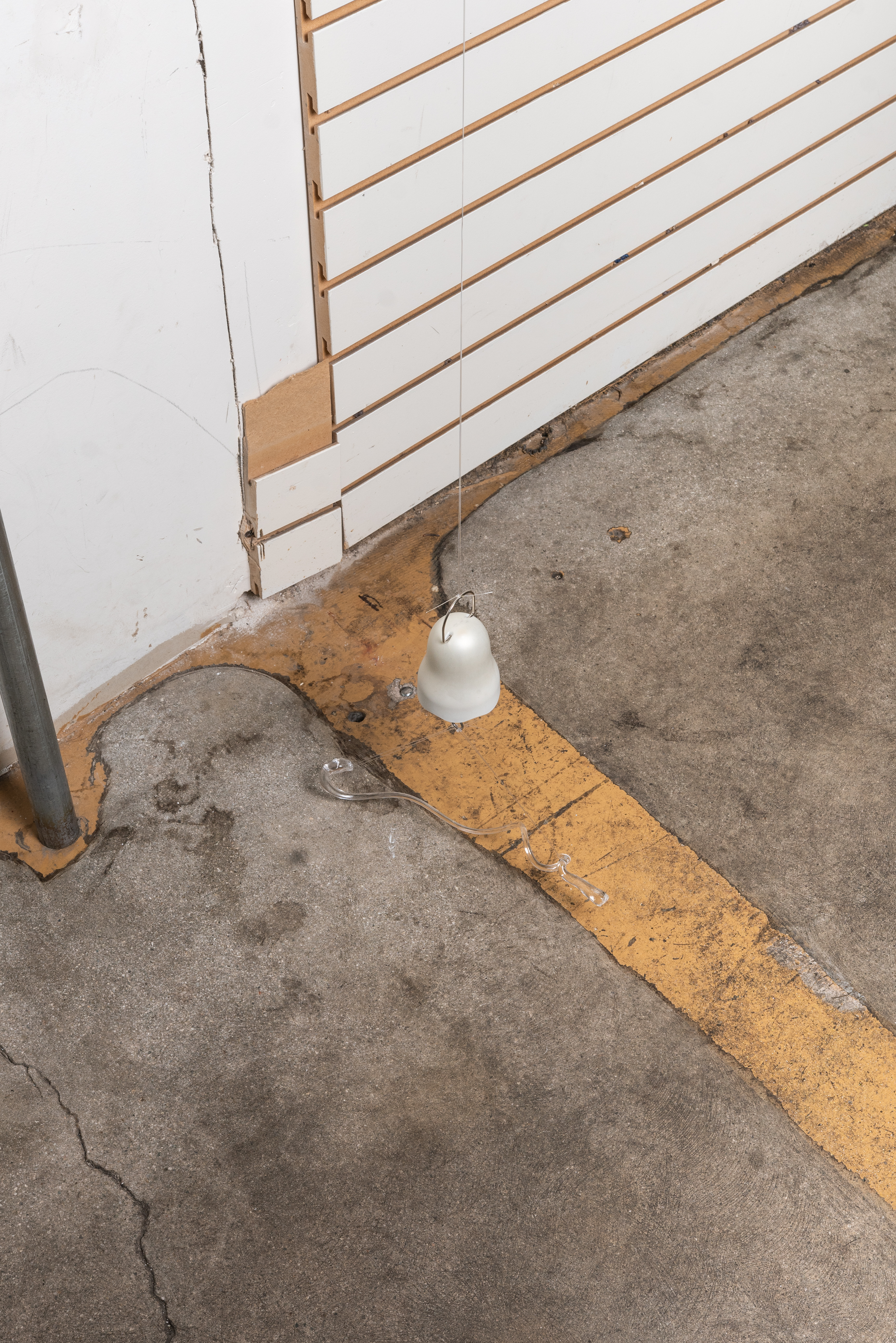
It’s this spinning that we find in waves, an exhibition of sculpture and sound assembled by artist Kelly Akashi. These works, by Morag Keil, Nancy Lupo, Chadwick Rantanen, Brennan Stalford, and Nico B. Young, invoke the body left and right, but in a state of absence. We live in a dissociated time and these are dissociated objects, convened in consumer materials. They’re parts at work, but producing what? Like the assembly line of the techno track, they are in the business of unproductive production. They are dancers making an aesthetic without thoughts, pushed along at a certain steady bpm. The thing about cylinders and their revolutions is they return to where they started. The gears continue to spin, repeating their dance until the batteries go dead.
Müller-Sievers, Helmut. The Cylinder: Kinematics of the Nineteenth Century. University of California Press, 2012. Pp. 66-102. Eshun, Kodwo. More Brilliant than the Sun: Adventures in Sonic Fiction. Quartet Books, 1998.